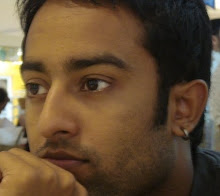
Opinion: The story BCG offered me $16,000 not to tell
The city was strange and the society unnerving, but what disturbed me the most about my experience in Dubai was my job as a business consultant.
By Keith Yost
STAFF COLUMNIST
April 9, 2010
The city was strange and the society was unnerving, but what disturbed me most about my Dubai experience was my job as a business consultant for the Boston Consulting Group.
I really had no idea what to expect, going in. In my mind, consulting was about answering business questions through analysis. It was supposed to be Excel sheets and models, sifting through data to discover profit and loss, and helping clients make decisions that would add the most value for themselves, and by extension, society.
It was worrisome to enter a new job without any guarantee that I would be qualified. I assumed BCG would train me, and that as it had been with MIT, intelligence and hard work would prove sufficient. Still, I wondered what I would do if for some reason it turned out that I couldn’t get my head around the analysis? In hindsight, analytical skills should have been the least of my worries.
Stretching reality
The first clue that my mental picture of consulting was off came with “training” in Munich. I expected instruction in Excel programming, data analysis, and business theory. Instead, Munich turned out to be little more than a week long social outing with other recently matriculated consultants and analysts within the BCG’s European branches. We donned name tags, shook hands, and drank often. Classes were fluffy, and mostly consisted of discussion of high-level, almost philosophical topics. I got along well — as both an American and a member of the Dubai office, I was doubly foreign and therefore double the curiosity.
After a pleasant week of pseudo-partying, I returned to Dubai and was assigned to writing case proposals. In the consulting business, it is standard practice for clients to write requests for proposals, describing the question they would like answered. The consulting firm in turn writes a case proposal: We will answer A by having Consultant B do X, Y, and Z. A well written case proposal promises much, but is deliberately vague about what concrete things the consultants will produce.
Case proposals were despised by the rank and file — one had a dozen bosses, unclear objectives, and virtually no coordination with co-workers. But in one sense, the proposals were good practice for real case work. Both involved stretching reality to fit whatever was assumed the client desired.
Despite having no work or research experience outside of MIT, I was regularly advertised to clients as an expert with seemingly years of topical experience relevant to the case. We were so good at rephrasing our credentials that even I was surprised to find in each of my cases, even my very first case, that I was the most senior consultant on the team.
I quickly found out why so little had been invested in developing my Excel-craft. Analytical skills were overrated, for the simple reason that clients usually didn’t know why they had hired us. They sent us vague requests for proposal, we returned vague case proposals, and by the time we were hired, no one was the wiser as to why exactly we were there.
I got the feeling that our clients were simply trying to mimic successful businesses, and that as consultants, our earnings came from having the luck of being included in an elaborate cargo-cult ritual. In any case it fell to us to decide for ourselves what question we had been hired to answer, and as a matter of convenience, we elected to answer questions that we had already answered in the course of previous cases — no sense in doing new work when old work will do. The toolkit I brought with me from MIT was absolute overkill in this environment. Most of my day was spent thinking up and writing PowerPoint slides. Sometimes, I didn’t even need to write them — we had a service in India that could put together pretty good copy if you provided them with a sketch and some instructions.
Burning out
I worked hard at MIT. I routinely took seven to ten classes per semester and filled whatever hours were left in the day with part-time jobs and tutoring. It was a fairly stupid way of going about my education, and I missed out on many of the learning opportunities that MIT offers outside of classes. I don’t recommend what I did to anyone. But as stupid as carrying double course loads was, it had one advantage: After all the long hours I put into MIT, I believed I was invincible. If MIT couldn’t burn me out, nothing else ever could.
It took roughly three months before BCG disproved my “burn-out proof” theory. Putting together PowerPoint slides was easy, the hours were lenient, and the fifth day of every week usually consisting of a leisurely day away from the client site. By all accounts, I should have been coasting through my tasks.
What I learned is that burning out isn’t just about work load, it’s about work load being greater than the motivation to do work. It was relatively easy to drag myself to classes when I thought I was working for my own betterment. It was hard to sit at a laptop and crank out slides when all I seemed to be accomplishing was the transfer of wealth from my client to my company.
I’m a free marketeer. I believe that voluntary exchange is not just a good method of incentivizing people to provide their labor and talents to society, but a robust moral system — goods and services represent tangible benefit to people, market prices represent the true value of goods in society, and wages represent the value that a worker provides to others. Absent negative externalities or monopoly effects, a man receives from the free market what he gives to it, his material worth is a running tally of the net benefit that he has provided to his fellow man. A high income is not only justified, but there is nobility to it.
My moral system is organized around a utilitarian principle of greatest good for the greatest number — that which adds value cannot be wrong. It did not bother me therefore when I was handed consulting reports that had been stolen from our competitors. If the information in those reports would help us improve our client, then who could say we were doing wrong? Like downloading MP3s, it was a victimless crime.
What I could not get my head around was having to force-fit analysis to a conclusion. In one case, the question I was tasked with solving had a clear and unambiguous answer: By my estimate, the client’s plan of action had a net present discounted value of negative one billion dollars. Even after accounting for some degree of error in my reckoning, I could still be sure that theirs was a losing proposition. But the client did not want analysis that contradicted their own, and my manager told me plainly that it was not our place to question what the client wanted.
In theory, it was their money to lose. If they wanted a consulting report that parroted back their pre-determined conclusion, who was I to complain? I did not have any right to dictate that their money be spent differently. And yet, to not speak out was wrong. To destroy a billion dollars is to destroy an almost unimaginable amount of human well-being. Spent carefully on anti-malarial bed nets and medicine, one billion dollars could save a million lives. This was a crime, and failing to try and stop it would be as bad as committing it myself. And if I could not prevent it, then what reason was I being paid such a high salary? How could I justify my income if not by prevailing in situations such as these?
Sit down, shut up
Early on, before I began case work, one manager I befriended gave me some advice. To survive, he told me, I needed to remember The Ratio. 50 percent of the job is nodding your head at whatever is being said. 20 percent is honest work and intelligent thinking. The remaining 30 percent is having the courage to speak up, but the wisdom to shut up when you are saying something that your manager does not want to hear.
I spoke up once. And when it became clear that I would be committing career suicide to press on, I shut up.
With a diligent enough effort, one can morally justify nearly anything. It was clear that the client was going to go forward with their decision regardless of how I acted. How could I be responsible for a foregone conclusion? And if I had no power to change things, then why shouldn’t I take the course of action that lets me keep my job? Who would it benefit for me to give up my paycheck? With my salary, I could make large and regular contributions to Red Cross or Doctors Without Borders — without it I would just be another unemployed bum.
But there is a large difference between telling yourself a story and believing it. Ultimately, the core reason I stayed silent wasn’t altruistic, but selfish. At my salary level, and with my expected advancement path, I could comfortably retire in my thirties. That would mean nearly a full lifetime at my disposal, a solid forty years to find true love and raise a family without distraction. It was the opportunity to travel, to achieve great things, to self-actualize. It was the prospect of living a life free of want and need. Who was I kidding? I wasn’t going to donate half my salary to Red Cross. I was going to deposit it into an index fund and speed off as soon as I was sure there was enough gas in the car.
The conscience is a pesky thing. It was no consolation that I had gotten the moral calculus to work out in my favor. I should have been the most relaxed man on the planet, and yet every day I went back to my hotel room and spent most of my time nervously pacing. I couldn’t sleep at night. I’d fill up a bathtub and scream into it. I couldn’t get over the feeling that this was not how I was supposed to spend my life.
Staying silent was agonizing. Nominally, my job was to provide advice and aid in my client’s decision-making process. In practice, my job consisted of sitting quietly and resisting the urge to dissent. Each day was like a punishment from Greek mythology; with every meeting my liver would grow anew to be eaten again by eagles.
I was reminded of the Milgram experiment. I wanted to quit. I didn’t want to have any hand in this, I didn’t want the responsibility of being the destroyer. But the man in the lab coat was telling me that the experiment must continue. Burnout soon followed.
It wasn’t just that I lost all motivation for my job; it was also that it is much harder than one would expect to do unsound analysis. There is an interesting kabuki dance to be done when crafting figures to fit a conclusion. The conclusion may be wrong, but you still need to make it believable. You still need numbers to fill out your PowerPoint slides, and the numbers need to have enough internal consistency not to throw up red flags at a casual glance. Honest analysis, even when it has weak areas, is easy to defend. If the numbers look fishy, there’s an explanation — you didn’t have direct data on such and such and had to use estimates from another report, or made a reasonable assumption somewhere. But when the numbers actually are fishy, and there’s no underlying logic to defend, you can’t have any rough areas for others to poke at. And when you know everything is fishy, you can’t tell what will look fishy to someone who hasn’t seen any numbers before.
This leads to what I like to call, “Find me a rock” problems. The classic “find me a rock” story is as follows: A manager goes to his engineer one day and asks for a rock. “A rock?” asks the engineer. “Yes, a rock. That isn’t going to be a problem, is it?” replies the manager. The engineer laughs and tells the manager he’ll go pick one up during his lunch break and it will be no problem. After lunch, the manager visits the engineer again and the engineer shows him the rock. The manager looks at it for a moment before telling the engineer, “No, that one won’t work at all. I need a rock.”
“Find me a rock” problems sound dead simple, but in actuality have requirements that are poorly stated or unknown. You never know what you’re looking for; you only know that you’ll know it when you see it.
When you disconnect analysis from reality, it would seem like you are freeing yourself up to do your job any way you like. In actuality, you are exchanging one set of clear objectives and rules for another that is complex and ill-defined. At one point my manager said to me, “Change the numbers, but don’t change the conclusion.” Of course, there’s no trouble in changing the numbers — it’s not as if there was much of a basis for this set of numbers over another — but change them how, and to what? Who knows? Find me a rock.
I don’t know if I’ll ever have kids. Still, when I find myself in a moral quandary, I like to think it through by imagining how I would explain the situation to my future, hypothetical children. What would I say? How would they react? Could I justify my actions as having been in their best interest?
I wasn’t sure at the time, but having had enough free time of late to ponder such questions, I think I’ve come to the conclusion that having a father who can pay for a top-notch education outweighs the disadvantage of being raised by a hypocrite. Sticking with the job for the sake of a paycheck passes the children test.
I was not surprised the day I lost my job. The writing was on the wall. BCG’s management might have been releasing reports claiming countries like Dubai would be islands of stability in the world’s rough financial seas, but to the ground troops, it was obvious the economy was not doing well. From the very beginning of my employment, I hadn’t met a single employee who planned on staying with the company — all of them were scrambling for lifeboats, trying to land cushy jobs with cash-stuffed clients or find their way back to their home countries.
What did surprise me was the offer BCG made to me as I was on the way out the door. In exchange for me signing an agreement, BCG would give me the rough equivalent of $16,000 in UAE dirhams. Much of it looked boilerplate, like any common compromise agreement used in Europe — in return for some money, I would stipulate that I hadn’t been discriminated against on the basis of race or gender, etc.
But the rest was very clearly a non-disclosure agreement, and it made me uncomfortable. I signed a non-disclosure agreement when I first took the job, but that only covered BCG’s intellectual property and client identities, things that seemed entirely reasonable to protect. This agreement went much further. Not only did it bar me from making any disparaging comments about BCG or my work experience, but I wouldn’t even be allowed to reveal the existence of the non-disclosure agreement itself. The implication was clear: I could either be a cheerleader for BCG or stay silent, but anything else would bring swift legal retribution. When I asked to have the non-disclosure clauses removed, I was told that the agreement was a standard offer to employees, and that its terms were non-negotiable.
As hard as it was to decide whether or not to stay at my job, it was easy to pass up the hush money. Mistake or not, my future hypothetical children deserved to hear their father’s story, and $16,000 did not seem like a lot of money in the grand scheme of things. After rejecting the offer, I enjoyed a full night’s rest.
Showing posts with label insights. Show all posts
Showing posts with label insights. Show all posts
Saturday, April 17, 2010

Wednesday, January 20, 2010
an insightful success story
Full of Beans: How a Classically Trained Chef Reinvented Fast Food
Published: January 20, 2010 in Knowledge@Wharton
It's a classic variation of the American success story: An aspiring entrepreneur starts a hole-in-the-wall restaurant serving food that's quick and unpretentious. Pretty soon, he starts a second restaurant, and then a third. Investors flock to the company, attracted to the owner's relentlessly perfectionist style. Before long, identical versions of that hole-in-the-wall have popped up in food courts and strip malls all across the country. And it's only a matter of time before this simple fast-food joint decides to take on the world.
On one level, that story describes the career of Steve Ells, who in 1993 founded a burrito restaurant in Denver that he called Chipotle Mexican Grill. Today, that restaurant is a publicly traded company with $1.3 billion in revenues from some 900 restaurants across North America. On November 14, 2009, Ells formally announced plans for the first European Chipotle, on London's Charing Cross Road, set to open next April.In January, Chipotle announced that it was also scouting potential locations in France and Germany.
But, as he made clear in a November Wharton Leadership Lecture, Ells is not your average chain-restaurant tycoon, a Colonel Sanders in trendy eyewear. And the chain he founded is not your average fast-food behemoth. As such, it provides a case study in whether a firm can thrive even as it spends extra money to honor a set of non-economic values. Ells believes the answer is yes.
"Chipotle now buys more naturally-raised meat -- antibiotic-free and no growth hormones, and fed an all-vegetarian diet -- than any other restaurant company in the world," he said. "I'm very proud of that, and it's more sustainable than the mass-produced commodity way." The chain has also begun buying organic beans and trying to source vegetables locally in-season. "All of a sudden I find myself with this team of 25,000 Chipotle employees who are excited about feeding people really good, sustainably raised food."
According to Ells, "We have an opportunity to change the way people think about fast food, which is what most people in this country eat." Much of it, he said, is based on the Ray Kroc model and the standard set by McDonald's. "Now we have a business model that's based on spending more for sustainably raised foods, and also making a very handsome profit and providing real growth opportunities."
A graduate of the famous Culinary Institute of America, Ells never meant to re-invent fast food. Quite the contrary: Having trained in classical French cooking and apprenticed at nationally celebrated gastronomic landmarks like San Francisco's celebrated Stars restaurant, his goal was to start his own white-tablecloth, haute-cuisine palace. But restaurant start-ups are costly and risky. So he decided to move home to Denver and open a local version of the cheap, tasty taquerias that he had loved in California. The plan was to use Chipotle as a cash cow to fund the "real" restaurant he dreamed about.
That didn't happen. Opened in an 800-square-foot former ice cream shop, Chipotle was an instant hit, making $30,000 a month. A rave newspaper review followed. The reviewer "said things like, 'Everything has depth and character, nuance, layers and layers of flavor,' describing it like it was some fine restaurant," even though the dish in question was an oversized burrito that came wrapped in tinfoil, Ells noted. "After that, there was not only a line, but a line out the door. We ran out of food."
Precision Cooking
Using cash flow and a loan from his father, Ells opened a second Chipotle, which "blew away the first." Despite his good fortune, Ells said, he actually felt guilty: He wanted to be a legendary chef, not a hustling fast-food entrepreneur. "So it was like, 'Okay, I'm going to start just one more, and then I'll start a real restaurant.'" But the chain's growth kept putting that off. Eventually Ells chalked up Chipotle's success to the fact that, unwittingly, he had been treating it like a real restaurant all along.
"Every single customer who came through that door was precious," he stated. "I had to give them a very special experience. I had a small crew. I taught them how to cook. I taught them how to grill the chicken just right and how to make beans -- you have to toast the cumin seeds until they just start smoking a little bit, and then grind them in the mortar and pestle -- and how to chop garlic so it doesn't oxidize, so you get a nice, fresh garlicky flavor.... It was very precise. We're cooking burritos and tacos here, but I was applying the classical French chef mentality that I had learned in cooking school. I would throw things and yell, and I had a temper. It was really quite a scene."
Ells, whose chain was on track to add roughly 120 new restaurants in 2009, says he is "opening three real restaurants a week, sometimes four." The Chipotles that have spread out from Denver still look a lot like the first store, right down to the simple corrugated metal surfaces that Ells installed back when he was doing his own manual labor. It's been a lot trickier, though, to maintain his fastidious French chef-style control over ingredients and techniques.
Much of his disdain for "mass-commodity" ingredients is a question of personal values. Once he became a big enough buyer of pork, he asked to see the facility the meat came from. "It really is terrifying," he said. "There's so much exploitation that I witnessed there, not only from the animal-protection point of view." He was also disturbed by the environmental consequences of the waste run-off from the facility -- and the public-health implications of having a pork supply kept on low-dose antibiotics to ward off diseases that could spread in industrial confinement.
"I knew at that moment I did not want my success to be based on this kind of exploitation," he said. "So we started buying all naturally-raised meat." But it wasn't just a question of being humane. His initial curiosity about the meat supply was actually prompted by the fact that he was unimpressed with the quality. By switching sources, he said, he wound up with a product that, to customers, just tasted better.
Ells' status as the anti-Ray Kroc is not without its ironies. As Chipotle began to take off and Ells began looking for sources of capital beyond family and cash flow, he wound up doing business with a certain global hamburger chain that was looking to invest in new business: McDonald's. Following an initial investment in 1998, the company held a majority stake as of 2001. By the time McDonald's divested, in 2006, Chipotle had 540 stores -- up from 18 when they first linked arms.
Lords of the Rings
"Culturally, Chipotle and McDonald's are just worlds apart," Ells noted, joking that his casually-dressed office staff referred to visiting McDonald's bigwigs as "the rings" because of the jewelry on the men's fingers. But he described the relationship as productive. "They really liked what I was doing," he said, recounting how he took executives into his kitchens and commissaries to show them cooking procedures that must have looked extraordinarily cumbersome to a firm accustomed to taking an industrial approach to flavor. One of them, Ells recalled, said the young Chipotle founder reminded him of Kroc.
The firms decided to part ways in 2006, Ells said, because McDonald's was eager to focus on its core business. And Ells was happy he no longer had to navigate the contrasting corporate cultures. "We just didn't see eye to eye," he said. Chipotle went public in an IPO that saw its share price double in one day -- the second-best restaurant IPO of all time. McDonald's, Ells added, ultimately made $1.2 billion after putting some $360 million into the chain.
Among the major differences with the golden arches: McDonald's wanted Chipotle to follow its franchise model. Ells -- ever the detail-obsessed chef -- resisted. "We wanted to own the economic model. You franchise if you want money and people. We had plenty of money for our growth rate, and we had great people." Ultimately, he decided, the firm was going to grow the way he wanted.
As someone with no particular business background, Ells has surrounded himself with seasoned pros, although he prefers not to hire top executives with a chain-restaurant background for fear that too much conventional wisdom will seep into the corporation. Four years ago, for example, Ells brought in as co-CEO an old friend named Montgomery F. Moran, whom he describes as an incredible leader of people. "He's a trial lawyer. And he said, 'Steve, I don't know anything about the restaurant business. I can't do this.' And I'm like, 'Perfect.... I don't want another seasoned fast-food executive.' In fact, I don't want any of them. I want them to think differently about things. This was one of my big mistakes during the McDonald's years: I let some of that [attitude] come into the organization.... We're very proud of doing things on our own terms."
One of the favorite innovations with Moran, Ells said, is something called the "restaurateur" program, under which Chipotle managers are designated restaurateurs, a status that comes with significant possible financial benefits. To be a restaurateur, a manager has to have a perfect store -- including a top-notch staff. "Every single person on the staff has to be somehow inspired and have characteristics that you can't teach: infectious enthusiasm, honesty, clean, presentable, good hygiene, fun to talk to, great eye contact, the kind of stuff you look for in a friend," he said.
The result, he added, was that turnover went up as managers looked to rid themselves of subpar staffers who might keep them from becoming a restaurateur. In addition, restaurateurs get a $10,000 bonus whenever one of their staff becomes a store manager. "We want them to assemble a team of high performers," he said. "The fast food business is plagued with people who are generally low performers.... No fast-food chain fires staff. They're like: 'Please! Come work!'" Chipotle, with a reputation for better pay than many chains, according to Ells, is also in a better position to replace entry-level staff who have been pushed out. "Chipotle has been built on word-of-mouth primarily, and I think we have developed a good bond with a lot of our customers." He said that sort of reputation could be extended through social media and a style that reflected Chipotle's unpretentious stores.
The son of a pharmaceutical executive, Ells grew up in Colorado and studied art history at the University of Colorado before switching gears and going to culinary school. He still lives in Denver, where Chipotle is headquartered. And, he says, he still loves a good burrito.
The Chipotle model -- with its better ingredients, better staffers and slightly higher prices -- is the wave of the future, Ells states, mostly because it matches the health, taste and philosophical priorities of the modern market. "We had a period of extraordinary, double digit same-store growth. I think it's a testament to what people want to eat. I'm hoping that more companies use Chipotle's model: Good food and not having preservatives or artificial [ingredients].... I hope it displaces the stuff that's based on exploitation, not only of the land and animals, but of people's taste buds and health."
Published: January 20, 2010 in Knowledge@Wharton
It's a classic variation of the American success story: An aspiring entrepreneur starts a hole-in-the-wall restaurant serving food that's quick and unpretentious. Pretty soon, he starts a second restaurant, and then a third. Investors flock to the company, attracted to the owner's relentlessly perfectionist style. Before long, identical versions of that hole-in-the-wall have popped up in food courts and strip malls all across the country. And it's only a matter of time before this simple fast-food joint decides to take on the world.
On one level, that story describes the career of Steve Ells, who in 1993 founded a burrito restaurant in Denver that he called Chipotle Mexican Grill. Today, that restaurant is a publicly traded company with $1.3 billion in revenues from some 900 restaurants across North America. On November 14, 2009, Ells formally announced plans for the first European Chipotle, on London's Charing Cross Road, set to open next April.In January, Chipotle announced that it was also scouting potential locations in France and Germany.
But, as he made clear in a November Wharton Leadership Lecture, Ells is not your average chain-restaurant tycoon, a Colonel Sanders in trendy eyewear. And the chain he founded is not your average fast-food behemoth. As such, it provides a case study in whether a firm can thrive even as it spends extra money to honor a set of non-economic values. Ells believes the answer is yes.
"Chipotle now buys more naturally-raised meat -- antibiotic-free and no growth hormones, and fed an all-vegetarian diet -- than any other restaurant company in the world," he said. "I'm very proud of that, and it's more sustainable than the mass-produced commodity way." The chain has also begun buying organic beans and trying to source vegetables locally in-season. "All of a sudden I find myself with this team of 25,000 Chipotle employees who are excited about feeding people really good, sustainably raised food."
According to Ells, "We have an opportunity to change the way people think about fast food, which is what most people in this country eat." Much of it, he said, is based on the Ray Kroc model and the standard set by McDonald's. "Now we have a business model that's based on spending more for sustainably raised foods, and also making a very handsome profit and providing real growth opportunities."
A graduate of the famous Culinary Institute of America, Ells never meant to re-invent fast food. Quite the contrary: Having trained in classical French cooking and apprenticed at nationally celebrated gastronomic landmarks like San Francisco's celebrated Stars restaurant, his goal was to start his own white-tablecloth, haute-cuisine palace. But restaurant start-ups are costly and risky. So he decided to move home to Denver and open a local version of the cheap, tasty taquerias that he had loved in California. The plan was to use Chipotle as a cash cow to fund the "real" restaurant he dreamed about.
That didn't happen. Opened in an 800-square-foot former ice cream shop, Chipotle was an instant hit, making $30,000 a month. A rave newspaper review followed. The reviewer "said things like, 'Everything has depth and character, nuance, layers and layers of flavor,' describing it like it was some fine restaurant," even though the dish in question was an oversized burrito that came wrapped in tinfoil, Ells noted. "After that, there was not only a line, but a line out the door. We ran out of food."
Precision Cooking
Using cash flow and a loan from his father, Ells opened a second Chipotle, which "blew away the first." Despite his good fortune, Ells said, he actually felt guilty: He wanted to be a legendary chef, not a hustling fast-food entrepreneur. "So it was like, 'Okay, I'm going to start just one more, and then I'll start a real restaurant.'" But the chain's growth kept putting that off. Eventually Ells chalked up Chipotle's success to the fact that, unwittingly, he had been treating it like a real restaurant all along.
"Every single customer who came through that door was precious," he stated. "I had to give them a very special experience. I had a small crew. I taught them how to cook. I taught them how to grill the chicken just right and how to make beans -- you have to toast the cumin seeds until they just start smoking a little bit, and then grind them in the mortar and pestle -- and how to chop garlic so it doesn't oxidize, so you get a nice, fresh garlicky flavor.... It was very precise. We're cooking burritos and tacos here, but I was applying the classical French chef mentality that I had learned in cooking school. I would throw things and yell, and I had a temper. It was really quite a scene."
Ells, whose chain was on track to add roughly 120 new restaurants in 2009, says he is "opening three real restaurants a week, sometimes four." The Chipotles that have spread out from Denver still look a lot like the first store, right down to the simple corrugated metal surfaces that Ells installed back when he was doing his own manual labor. It's been a lot trickier, though, to maintain his fastidious French chef-style control over ingredients and techniques.
Much of his disdain for "mass-commodity" ingredients is a question of personal values. Once he became a big enough buyer of pork, he asked to see the facility the meat came from. "It really is terrifying," he said. "There's so much exploitation that I witnessed there, not only from the animal-protection point of view." He was also disturbed by the environmental consequences of the waste run-off from the facility -- and the public-health implications of having a pork supply kept on low-dose antibiotics to ward off diseases that could spread in industrial confinement.
"I knew at that moment I did not want my success to be based on this kind of exploitation," he said. "So we started buying all naturally-raised meat." But it wasn't just a question of being humane. His initial curiosity about the meat supply was actually prompted by the fact that he was unimpressed with the quality. By switching sources, he said, he wound up with a product that, to customers, just tasted better.
Ells' status as the anti-Ray Kroc is not without its ironies. As Chipotle began to take off and Ells began looking for sources of capital beyond family and cash flow, he wound up doing business with a certain global hamburger chain that was looking to invest in new business: McDonald's. Following an initial investment in 1998, the company held a majority stake as of 2001. By the time McDonald's divested, in 2006, Chipotle had 540 stores -- up from 18 when they first linked arms.
Lords of the Rings
"Culturally, Chipotle and McDonald's are just worlds apart," Ells noted, joking that his casually-dressed office staff referred to visiting McDonald's bigwigs as "the rings" because of the jewelry on the men's fingers. But he described the relationship as productive. "They really liked what I was doing," he said, recounting how he took executives into his kitchens and commissaries to show them cooking procedures that must have looked extraordinarily cumbersome to a firm accustomed to taking an industrial approach to flavor. One of them, Ells recalled, said the young Chipotle founder reminded him of Kroc.
The firms decided to part ways in 2006, Ells said, because McDonald's was eager to focus on its core business. And Ells was happy he no longer had to navigate the contrasting corporate cultures. "We just didn't see eye to eye," he said. Chipotle went public in an IPO that saw its share price double in one day -- the second-best restaurant IPO of all time. McDonald's, Ells added, ultimately made $1.2 billion after putting some $360 million into the chain.
Among the major differences with the golden arches: McDonald's wanted Chipotle to follow its franchise model. Ells -- ever the detail-obsessed chef -- resisted. "We wanted to own the economic model. You franchise if you want money and people. We had plenty of money for our growth rate, and we had great people." Ultimately, he decided, the firm was going to grow the way he wanted.
As someone with no particular business background, Ells has surrounded himself with seasoned pros, although he prefers not to hire top executives with a chain-restaurant background for fear that too much conventional wisdom will seep into the corporation. Four years ago, for example, Ells brought in as co-CEO an old friend named Montgomery F. Moran, whom he describes as an incredible leader of people. "He's a trial lawyer. And he said, 'Steve, I don't know anything about the restaurant business. I can't do this.' And I'm like, 'Perfect.... I don't want another seasoned fast-food executive.' In fact, I don't want any of them. I want them to think differently about things. This was one of my big mistakes during the McDonald's years: I let some of that [attitude] come into the organization.... We're very proud of doing things on our own terms."
One of the favorite innovations with Moran, Ells said, is something called the "restaurateur" program, under which Chipotle managers are designated restaurateurs, a status that comes with significant possible financial benefits. To be a restaurateur, a manager has to have a perfect store -- including a top-notch staff. "Every single person on the staff has to be somehow inspired and have characteristics that you can't teach: infectious enthusiasm, honesty, clean, presentable, good hygiene, fun to talk to, great eye contact, the kind of stuff you look for in a friend," he said.
The result, he added, was that turnover went up as managers looked to rid themselves of subpar staffers who might keep them from becoming a restaurateur. In addition, restaurateurs get a $10,000 bonus whenever one of their staff becomes a store manager. "We want them to assemble a team of high performers," he said. "The fast food business is plagued with people who are generally low performers.... No fast-food chain fires staff. They're like: 'Please! Come work!'" Chipotle, with a reputation for better pay than many chains, according to Ells, is also in a better position to replace entry-level staff who have been pushed out. "Chipotle has been built on word-of-mouth primarily, and I think we have developed a good bond with a lot of our customers." He said that sort of reputation could be extended through social media and a style that reflected Chipotle's unpretentious stores.
The son of a pharmaceutical executive, Ells grew up in Colorado and studied art history at the University of Colorado before switching gears and going to culinary school. He still lives in Denver, where Chipotle is headquartered. And, he says, he still loves a good burrito.
The Chipotle model -- with its better ingredients, better staffers and slightly higher prices -- is the wave of the future, Ells states, mostly because it matches the health, taste and philosophical priorities of the modern market. "We had a period of extraordinary, double digit same-store growth. I think it's a testament to what people want to eat. I'm hoping that more companies use Chipotle's model: Good food and not having preservatives or artificial [ingredients].... I hope it displaces the stuff that's based on exploitation, not only of the land and animals, but of people's taste buds and health."
Saturday, May 30, 2009
conversation with the Alchemist!
MIND SET
IN CONVERSATION WITH THE ALCHEMIST
The creative process must be revered as a spiritual search, says Paulo Coelho, one of the world’s bestknown authors. His quest straddled the conventional pilgrimage and hippiedom. But the answer was to be found in a basic humanity and social entrepreneurship, he tells Bachi Karkaria
Where do get your spiritual underpinnings? How much of this influences the way you are and the way you write? How much of Paulo Coelho, the man, and Paulo Coelho, the writer, can be attributed to your Roman Catholic upbringing?
I grew up, like almost all Brazilians, in a strictly Catholic family. Later, at the age of rebellion, I doubted Catholicism, and felt that I must try something new. Then I became a hippie. During this time, I travelled a lot, met people of different backgrounds, and learnt different paths to come closer to spirituality. After I did a pilgrimage to Santiago de Compostela, I returned to the Catholic faith – just because it is in my blood, not because it is the best religion. I am a Catholic, but I don’t think you can put God in a church.
In the end, all religions tend to point to the same light. In between the light and us, sometimes there are too many rules. Some of these rules are important, other should not blind us or diminish the intensity of this light, the soul of the world.
You write a book once every three years. Do you
spend the intervening time on researching the book or doing other things? For instance, how long did you take to pick up all the details of the film and fashion world which make your latest, The Winner Stands
Alone, almost a work of faction?
Regarding the creative process, I only allow myself to write every two years because I feel that I’ve gathered enough emotional energy to come up with a story. Every time that I write a new book, I am experiencing the sensations of death and rebirth. When I write, I am a woman. I get pregnant from life, and I don’t know what the baby will look like.
My pregnancy cycle is what takes two years. During this time I don’t take notes, I don’t make plans. The only thing that I know is that life put inside me a seed that will grow when time comes. Then, when the time comes, I sit and write. Every creative act demands a respect for mystery, and I respect the mystery, without trying to understand it. For my latest book, The Winner Stands Alone, I was inspired by the Cannes Film Festival that I attend every year. There I had the possibility to understand the “behind-the-scenes” mechanism of the movie and fashion industries.
You’ve described yourself as an
“internet junkie”. Is that a hip term
or just New Age egotism?
An internet junkie is neither a hip term of a new age egotistical thing – it’s just a realization. I spend hours in front of the computer surfing the web and chatting with friends and readers.
To what do you attribute the huge success of The
Alchemist? (At 67 languages, it holds the Guinness
record for being the world’s most-translated book). Given this, are you weighed down by its baggage?
I really don't know why my characters are so popular in different parts of the world and in different cultures. I don’t have a ready-made formula to apply when I embark on a new book, but I’m always controlled by many elements: discipline, compassion and a sincere eagerness to understand myself. When I start a new book, I try to approach myself from a different angle. In The Alchemist, for example, I was trying to explain to myself what writing meant to me. The way I found to do this was through a metaphor.
In Eleven Minutes, I started with the question of why sexuality is considered one of the major issues in life. But I had my doubts. And that’s why the hero asks if it's true that the world could revolve around 11 minutes. In The Zahir, there is a kind of a snapshot of my present moment as a famous writer. In The Winner Stands Alone, I wanted to explore the world of fashion and unravel why we tend to adopt dreams that are not our own so easily.
What difference does a book, even one that has sold millions of copies and is the most translated, make to the scheme of things?
First, I think you should define “the scheme of things” — what for you is the scheme of things.
For me, the scheme of things is to share my soul through writing. Books have always made a lot of difference in my world. They set me free when all those around me said that life had to be in a certain way and not in another. They enabled me to dream when all around me was trying to lure me to the great illusion of “security”.
For some people, music holds this sacred place, for others, medicine or gardening or cooking or religion… At the end of the day, the great scheme of things is the consequence of every individual choice.
In India, even mainstream media is obsessed with
celebrity culture, and the public, while pretending to be snobbish about it, laps it up. What does this say about a society more interested in the divorce of a
distant singer called Madonna than in the poverty it sees under its nose? Do you think “celebrification” is seen as part of a nation’s entry into the Big League?
I am not here to judge the priorities of any given society. What I don’t understand in your question is the correlation between “celebrification” and “Big League Nations”. I don’t see how buying gossip magazines may raise the GDP of a country…
Furthermore, I don’t subscribe to the view that there are “Big League Nations” and “Minor League ones”. I grant that there are huge disparities but I think there is also an international community (despite the constant effort of the media to diminish this reality) that thinks and operates beyond this simplistic way of seeing the world. Not mentioning the string of social entrepreneurs that actively work towards a better equilibrium inside their societies.
Rio de Janeiro, like many big Indian cities, is undergoing major change, physical and social. Which of
these disturbs you and which do you celebrate?
In today’s world, disparities cross every single city (may it be in Brazil, India, the US or Europe). So in regards to the changes we see in all great cities of the world, I would say that:
• What disturbs me the most is the violence — which is the consequence of a profound rift in society: when those who are at its base are denied their intrinsic dignity.
• What I celebrate is the constant battle of the warriors of light that work without rest to shorten the disparities.
I met in the 90’s a mother and a daughter who were taking care of underprivileged children in a slum next to my house in Rio. They firmly believed that by granting these children chances they were changing the spiralling-down dynamic of poverty. I decided to join them in their fight to bring hope and change to these children and their families. The project today, called Solar Meninos da Luz, grants to more than 450 children education and many extra-curricular activities.
I think that changes start at the individual level and slowly tend to gain a social one: at my level, I’m trying to make a difference and this in my eyes, is reason enough for celebration
IN CONVERSATION WITH THE ALCHEMIST
The creative process must be revered as a spiritual search, says Paulo Coelho, one of the world’s bestknown authors. His quest straddled the conventional pilgrimage and hippiedom. But the answer was to be found in a basic humanity and social entrepreneurship, he tells Bachi Karkaria
Where do get your spiritual underpinnings? How much of this influences the way you are and the way you write? How much of Paulo Coelho, the man, and Paulo Coelho, the writer, can be attributed to your Roman Catholic upbringing?
I grew up, like almost all Brazilians, in a strictly Catholic family. Later, at the age of rebellion, I doubted Catholicism, and felt that I must try something new. Then I became a hippie. During this time, I travelled a lot, met people of different backgrounds, and learnt different paths to come closer to spirituality. After I did a pilgrimage to Santiago de Compostela, I returned to the Catholic faith – just because it is in my blood, not because it is the best religion. I am a Catholic, but I don’t think you can put God in a church.
In the end, all religions tend to point to the same light. In between the light and us, sometimes there are too many rules. Some of these rules are important, other should not blind us or diminish the intensity of this light, the soul of the world.
You write a book once every three years. Do you
spend the intervening time on researching the book or doing other things? For instance, how long did you take to pick up all the details of the film and fashion world which make your latest, The Winner Stands
Alone, almost a work of faction?
Regarding the creative process, I only allow myself to write every two years because I feel that I’ve gathered enough emotional energy to come up with a story. Every time that I write a new book, I am experiencing the sensations of death and rebirth. When I write, I am a woman. I get pregnant from life, and I don’t know what the baby will look like.
My pregnancy cycle is what takes two years. During this time I don’t take notes, I don’t make plans. The only thing that I know is that life put inside me a seed that will grow when time comes. Then, when the time comes, I sit and write. Every creative act demands a respect for mystery, and I respect the mystery, without trying to understand it. For my latest book, The Winner Stands Alone, I was inspired by the Cannes Film Festival that I attend every year. There I had the possibility to understand the “behind-the-scenes” mechanism of the movie and fashion industries.
You’ve described yourself as an
“internet junkie”. Is that a hip term
or just New Age egotism?
An internet junkie is neither a hip term of a new age egotistical thing – it’s just a realization. I spend hours in front of the computer surfing the web and chatting with friends and readers.
To what do you attribute the huge success of The
Alchemist? (At 67 languages, it holds the Guinness
record for being the world’s most-translated book). Given this, are you weighed down by its baggage?
I really don't know why my characters are so popular in different parts of the world and in different cultures. I don’t have a ready-made formula to apply when I embark on a new book, but I’m always controlled by many elements: discipline, compassion and a sincere eagerness to understand myself. When I start a new book, I try to approach myself from a different angle. In The Alchemist, for example, I was trying to explain to myself what writing meant to me. The way I found to do this was through a metaphor.
In Eleven Minutes, I started with the question of why sexuality is considered one of the major issues in life. But I had my doubts. And that’s why the hero asks if it's true that the world could revolve around 11 minutes. In The Zahir, there is a kind of a snapshot of my present moment as a famous writer. In The Winner Stands Alone, I wanted to explore the world of fashion and unravel why we tend to adopt dreams that are not our own so easily.
What difference does a book, even one that has sold millions of copies and is the most translated, make to the scheme of things?
First, I think you should define “the scheme of things” — what for you is the scheme of things.
For me, the scheme of things is to share my soul through writing. Books have always made a lot of difference in my world. They set me free when all those around me said that life had to be in a certain way and not in another. They enabled me to dream when all around me was trying to lure me to the great illusion of “security”.
For some people, music holds this sacred place, for others, medicine or gardening or cooking or religion… At the end of the day, the great scheme of things is the consequence of every individual choice.
In India, even mainstream media is obsessed with
celebrity culture, and the public, while pretending to be snobbish about it, laps it up. What does this say about a society more interested in the divorce of a
distant singer called Madonna than in the poverty it sees under its nose? Do you think “celebrification” is seen as part of a nation’s entry into the Big League?
I am not here to judge the priorities of any given society. What I don’t understand in your question is the correlation between “celebrification” and “Big League Nations”. I don’t see how buying gossip magazines may raise the GDP of a country…
Furthermore, I don’t subscribe to the view that there are “Big League Nations” and “Minor League ones”. I grant that there are huge disparities but I think there is also an international community (despite the constant effort of the media to diminish this reality) that thinks and operates beyond this simplistic way of seeing the world. Not mentioning the string of social entrepreneurs that actively work towards a better equilibrium inside their societies.
Rio de Janeiro, like many big Indian cities, is undergoing major change, physical and social. Which of
these disturbs you and which do you celebrate?
In today’s world, disparities cross every single city (may it be in Brazil, India, the US or Europe). So in regards to the changes we see in all great cities of the world, I would say that:
• What disturbs me the most is the violence — which is the consequence of a profound rift in society: when those who are at its base are denied their intrinsic dignity.
• What I celebrate is the constant battle of the warriors of light that work without rest to shorten the disparities.
I met in the 90’s a mother and a daughter who were taking care of underprivileged children in a slum next to my house in Rio. They firmly believed that by granting these children chances they were changing the spiralling-down dynamic of poverty. I decided to join them in their fight to bring hope and change to these children and their families. The project today, called Solar Meninos da Luz, grants to more than 450 children education and many extra-curricular activities.
I think that changes start at the individual level and slowly tend to gain a social one: at my level, I’m trying to make a difference and this in my eyes, is reason enough for celebration
Thursday, December 18, 2008
no shot goes waste!
when nothing seems to help i go look at a stonecutter who hammers 100 times at a rock without a crack showing in it. And he hammers it again and the rocks breaks into 2 at the 101's hit. And i know that it was not that stroke that did it, but the hits before that, which seemed to fail!!!!
Amazing, outstanding, fabulous
keep hitting.....one of your hits will break the rock and every single shot in the past would have then succeeded...
when edison was asked after having invested the bulb how did it feel to have failed 999 times and succeeded the 1000th time, he said:
i din't fail even once, it just turned out to be a 1000 step process
Amazing, outstanding, fabulous
keep hitting.....one of your hits will break the rock and every single shot in the past would have then succeeded...
when edison was asked after having invested the bulb how did it feel to have failed 999 times and succeeded the 1000th time, he said:
i din't fail even once, it just turned out to be a 1000 step process
Thursday, October 16, 2008
Bill Gates' last day at Microsoft
From: Bill Gates
Sent: Friday, June 27, 2008 11:10 PM
To: Microsoft - All Employees (QBDG)
Subject: My last full-time day at Microsoft
I want to share some thoughts on my last day as a full-time Microsoft employee.
For the last 33 years, I’ve had the ideal job. It’s been incredibly exciting to come here every day to work with the smartest people in the world to develop breakthrough software. Together, we have built a great company that has profoundly changed the world for the better.
After today, I will be shifting my full-time focus to the work of the Bill and Melinda Gates Foundation while keeping a strong connection to Microsoft.
The fact that I am making a career change does not mean that our work at Microsoft is done. In fact, the most exciting impact of our software is still ahead of us. Everything we have done up to now is just the foundation for the more dramatic breakthroughs to come. As you apply the magic of software to delivering a new generation of innovations, this company will continue to transform the way people communicate, create, and share experiences.
Microsoft is in an incredible position because we have momentum and a great pipeline of products and technologies. Even more important, we have great people at every level. In research and development we have great engineers focused on solving the most pressing challenges in computer science and turning new ideas into innovative products. In marketing, sales, and customer service, our world-class organizations keep getting better.
We also have strong leadership. As Microsoft has grown, one of the most exciting and fulfilling things for me has been to watch new leaders develop.
It starts at the very top. For the last 28 years, I have loved working side by side with Steve. Even now after all these years I am regularly impressed with his energy and insight. I think he and I have enjoyed one of the great business partnerships of all time. Steve has done a great job leading the company since he became CEO in 2000. Steve’s passion for democratizing the power of technology and inspiring customers, partners, and employees will keep us driving ahead.
I am thrilled to have Ray and Craig playing key roles in guiding the company’s strategy. For over a decade I had hoped that we could convince Ray to join Microsoft—and in the three years he has been here, he has made a huge difference in helping us focus on the challenge and opportunity of software plus services. I have worked with Craig for more than 15 years. His ability to anticipate the future direction of technology is a key asset, as is his deep interest in and understanding of emerging markets.
Of course, I’ll continue to be involved in the work of the company as part-time Chairman. As part of this I will help with a handful of projects that Steve, Ray, and Craig select.
As I reflect on the last three decades, the thing I’m proudest of is the role that this company has played in making the power of digital technology accessible and affordable. Software running on personal computers and other devices is the best tool for empowerment in human history. Microsoft founded the personal computer software business and we built the platforms that enabled the software industry to develop. Without your contributions, we would not have succeeded in making our dream of a computer on every desk and in every home a reality for more than 1 billion people worldwide—a dream we will extend to everyone in the future.
As I make the transition to focus more of my time and energy on the Gates Foundation, I am looking forward to applying the lessons I’ve learned—and, in some cases, the technologies that we have developed—to help address some of the critical issues that people around the world face in education, economic development, and health.
I want to thank all of you for your hard work and your dedication. It has been a privilege and an inspiration to come to Microsoft every day. I look forward to the amazing, world-changing innovations you will deliver in the years ahead as you continue the great work this company has always done.
Bill
Sent: Friday, June 27, 2008 11:10 PM
To: Microsoft - All Employees (QBDG)
Subject: My last full-time day at Microsoft
I want to share some thoughts on my last day as a full-time Microsoft employee.
For the last 33 years, I’ve had the ideal job. It’s been incredibly exciting to come here every day to work with the smartest people in the world to develop breakthrough software. Together, we have built a great company that has profoundly changed the world for the better.
After today, I will be shifting my full-time focus to the work of the Bill and Melinda Gates Foundation while keeping a strong connection to Microsoft.
The fact that I am making a career change does not mean that our work at Microsoft is done. In fact, the most exciting impact of our software is still ahead of us. Everything we have done up to now is just the foundation for the more dramatic breakthroughs to come. As you apply the magic of software to delivering a new generation of innovations, this company will continue to transform the way people communicate, create, and share experiences.
Microsoft is in an incredible position because we have momentum and a great pipeline of products and technologies. Even more important, we have great people at every level. In research and development we have great engineers focused on solving the most pressing challenges in computer science and turning new ideas into innovative products. In marketing, sales, and customer service, our world-class organizations keep getting better.
We also have strong leadership. As Microsoft has grown, one of the most exciting and fulfilling things for me has been to watch new leaders develop.
It starts at the very top. For the last 28 years, I have loved working side by side with Steve. Even now after all these years I am regularly impressed with his energy and insight. I think he and I have enjoyed one of the great business partnerships of all time. Steve has done a great job leading the company since he became CEO in 2000. Steve’s passion for democratizing the power of technology and inspiring customers, partners, and employees will keep us driving ahead.
I am thrilled to have Ray and Craig playing key roles in guiding the company’s strategy. For over a decade I had hoped that we could convince Ray to join Microsoft—and in the three years he has been here, he has made a huge difference in helping us focus on the challenge and opportunity of software plus services. I have worked with Craig for more than 15 years. His ability to anticipate the future direction of technology is a key asset, as is his deep interest in and understanding of emerging markets.
Of course, I’ll continue to be involved in the work of the company as part-time Chairman. As part of this I will help with a handful of projects that Steve, Ray, and Craig select.
As I reflect on the last three decades, the thing I’m proudest of is the role that this company has played in making the power of digital technology accessible and affordable. Software running on personal computers and other devices is the best tool for empowerment in human history. Microsoft founded the personal computer software business and we built the platforms that enabled the software industry to develop. Without your contributions, we would not have succeeded in making our dream of a computer on every desk and in every home a reality for more than 1 billion people worldwide—a dream we will extend to everyone in the future.
As I make the transition to focus more of my time and energy on the Gates Foundation, I am looking forward to applying the lessons I’ve learned—and, in some cases, the technologies that we have developed—to help address some of the critical issues that people around the world face in education, economic development, and health.
I want to thank all of you for your hard work and your dedication. It has been a privilege and an inspiration to come to Microsoft every day. I look forward to the amazing, world-changing innovations you will deliver in the years ahead as you continue the great work this company has always done.
Bill
Tuesday, October 14, 2008
Leaders are not appointed, they rise
I have made a mention of this insight on my other blog as well. Leaders are not appointed, they rise. This statement was made by our crativity and innovation professor. It's beautiful.
Another wonderful statement was "fail often, fail fast". It is just a re-inforcement of "Ready, FIRE, Aim"
Another wonderful statement was "fail often, fail fast". It is just a re-inforcement of "Ready, FIRE, Aim"
Thursday, September 18, 2008
decisions!!
what is a decision? A decision is a commitment to action, non-negotiable, case closed.
Once you decide to exercise for an hour every day, you just do it, no matter what.....jack canfield
you do it 100% of the time. it becomes a rule guiding your life.
DECISIONS ARE IRREREVERSIBLE CHOICES. ONCE MADE, THERE IS NOT A POSSIBILITY OF BACKING UP.
Once you decide to exercise for an hour every day, you just do it, no matter what.....jack canfield
you do it 100% of the time. it becomes a rule guiding your life.
DECISIONS ARE IRREREVERSIBLE CHOICES. ONCE MADE, THERE IS NOT A POSSIBILITY OF BACKING UP.
Sunday, September 14, 2008
the things that we would like to do!!
one thing is clear to my mind, the only thing that guides the decision between the right and wrong is the conscience, but I am not sure if it is always to be respected or it is always right.
if something is right for me, it has to be right for someone else as well. If that does not work, it's nothing but hypocrisy which is something i will never resort to.
Now, but that does not mean I can afford to be right all the time but i can afford to be honest with myself!!
if something is right for me, it has to be right for someone else as well. If that does not work, it's nothing but hypocrisy which is something i will never resort to.
Now, but that does not mean I can afford to be right all the time but i can afford to be honest with myself!!
Friday, September 12, 2008
Success demands no explanations!!
Some people win. They just win. They do not know why and how. Probably they take risks, probably they do certain things which simply work!!!
They are felicinated, respected because they won but who cares how they won? People might say 100 things, who did not win and criticise the winners, but winners have been and will always be celebrated.
Failure on the other hand, accepts no excuses, no explanations. No one gives a damn about you and no one cares that you have were also an also ran!! who cares that you even exist.
This is how it's been and this is how it will always be!!
Success demands no explanations!!
Failure know no excuses!
go win.
no one gives a damn anyways, winners are celebrated and losers are forgotten
They are felicinated, respected because they won but who cares how they won? People might say 100 things, who did not win and criticise the winners, but winners have been and will always be celebrated.
Failure on the other hand, accepts no excuses, no explanations. No one gives a damn about you and no one cares that you have were also an also ran!! who cares that you even exist.
This is how it's been and this is how it will always be!!
Success demands no explanations!!
Failure know no excuses!
go win.
no one gives a damn anyways, winners are celebrated and losers are forgotten
Wednesday, September 10, 2008
Gifted People!!
Sometimes i think about people, actually many times, who reached pinnacles of success starting from no where!!
Richard Branson, who i consider my idol is a great story. He never went to college. His mission is to give the man on the road a better deal. Be it through music, insurance, trains, apparel, airlines and many other businesses!!
Bill Gates dropped out to transform the world through Microsoft
Steve Jobs did similar things, not a great student either
Lakhshmi Mittal is a Bcom
Sunil Bharti Mittal used to be a cycle parts trader
Walt Disney was fired by a new paper editor for lack of ideas!!!
Just reading this case on Ritz Carlton, which mentions the story of Mr. Horst Schulze, who from a dishwasher rose his way up to become the president and COO of the most prestigious hotel chains in the world and just inspired me to write this post
Dhirubai Ambani whose legacy, Reliance Industries is now one of the drivers of Indian. Reliance Group revenue is equivalent to about 3.5% of India's GDP according to a source on the internet. Imagine, he used to be a petrol pump attendant and started with nothing.
Mother Teresa brought about changes by exemplary leadership. Mahatma Gandhi came from nowhere to become so instrumental in India's independence.
I could take many more names and most of them used to common men and women like you and me before they embarked on their lifelong missions.
These missions changed the world in one or the other. Or they set examples of extraordinary human success. They became inspirations from others and derived their inspirations from themslves.
We also want to change the world, don't we. We need a mission to be able to do that and the guts to walk the lonely road.
Richard Branson, who i consider my idol is a great story. He never went to college. His mission is to give the man on the road a better deal. Be it through music, insurance, trains, apparel, airlines and many other businesses!!
Bill Gates dropped out to transform the world through Microsoft
Steve Jobs did similar things, not a great student either
Lakhshmi Mittal is a Bcom
Sunil Bharti Mittal used to be a cycle parts trader
Walt Disney was fired by a new paper editor for lack of ideas!!!
Just reading this case on Ritz Carlton, which mentions the story of Mr. Horst Schulze, who from a dishwasher rose his way up to become the president and COO of the most prestigious hotel chains in the world and just inspired me to write this post
Dhirubai Ambani whose legacy, Reliance Industries is now one of the drivers of Indian. Reliance Group revenue is equivalent to about 3.5% of India's GDP according to a source on the internet. Imagine, he used to be a petrol pump attendant and started with nothing.
Mother Teresa brought about changes by exemplary leadership. Mahatma Gandhi came from nowhere to become so instrumental in India's independence.
I could take many more names and most of them used to common men and women like you and me before they embarked on their lifelong missions.
These missions changed the world in one or the other. Or they set examples of extraordinary human success. They became inspirations from others and derived their inspirations from themslves.
We also want to change the world, don't we. We need a mission to be able to do that and the guts to walk the lonely road.
Subscribe to:
Posts (Atom)